
Coercive control · Domestic abuse · Domestic violence
Last Date
See the signs and break the cycle. A story of coercive control, told over a single first date.
1 award

Last Date is a domestic abuse training drama from the makers of Leaving, designed to help audiences see the warning signs of coercive control and abuse.
The film:
Increases understanding of how abuse begins and traps people in relationships through the cycle of abuse
Provides preventative training for young people in schools, colleges and youth groups
Provides a medium for training people in the public and voluntary sectors to more easily recognise and support people suffering from domestic abuse
Free training resources
Free to download and use alongside the film.
-

Good Practice Guide
How to make the best use of Last Date: the beginning, progression and repetition of abusive relationships, and how subtle the first warning signs can be.
-
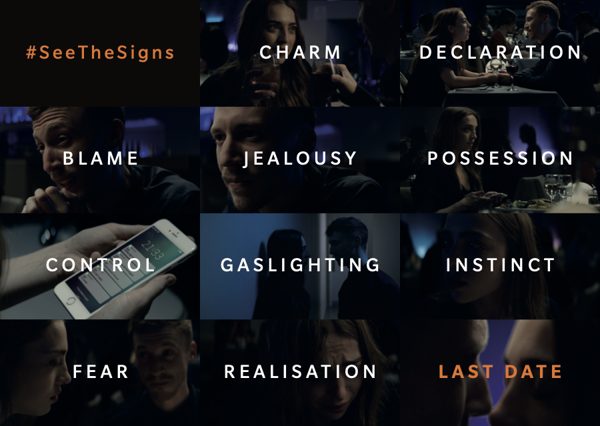
Spot the Signs
A one-page guide to the stages of coercive control shown in the film, from charm and jealousy to gaslighting, fear and realisation.
By using innovative storytelling techniques, Last Date fast-tracks the gradual nature of psychological and physical abuse and condenses it into a single night, making it clear for the viewer to see how such behaviour can take hold of a person’s life, and further escalate to entrap them in a dangerous, repetitive cycle.
Last Date is a vital resource for trainers and practitioners to use to raise the issue of coercive control and abuse. I believe this will be a mainstay of DV training for many years to come.
Highlighting key stages from charm, grooming, jealousy, humiliation, possessiveness, gaslighting, isolation, intimidation, threat and assault, Last Date aims to show viewers the warning signs and red flags of a potentially abusive person, enabling them to steer clear and move forward in their own lives with more respectful, healthier relationships.
It also has the power to generate discussion around roles and responsibilities within relationships and challenge perceptions and stereotypes but also the role of society as a whole in how it reacts and intervenes.
If Leaving’s purpose was to illustrate why victims of abuse don’t just leave, Last Date’s aim is to show how it begins and manifests.
Like its predecessor, Last Date can be used in a training capacity by experts working in the field of domestic abuse and violence to discuss this behaviour, but this time by those working in the education sector, such as safeguarding practitioners. This crossover also provides opportunities for both prospective users of the film to collaborate, so that trainers and schools, colleges and universities can work together to provide the very best service in education and prevention.
The film was made to work in a classroom, and it is used by schools, colleges and universities for PSHE and relationships education.
Ellie Ekers and Perry Moore star as Lori and Jack on their first date. We cast a couple who would feel both aspirational and relatable: old enough to have some life experience, but young enough that their situation and the restaurant setting feel true to life. Setting the film in a restaurant also steps away from the well-trodden ways abuse is usually shown on screen, removing assumptions so the behaviour can be seen for what it is.
Last Date in the classroom
Students at Limes College discuss the film after a screening.
What professionals say
Trainers, safeguarding leads and domestic abuse specialists share their reactions to Last Date.
Lead Sponsor
Produced in association with
Cumbria Police & Crime Commissioner
Additional supporters